


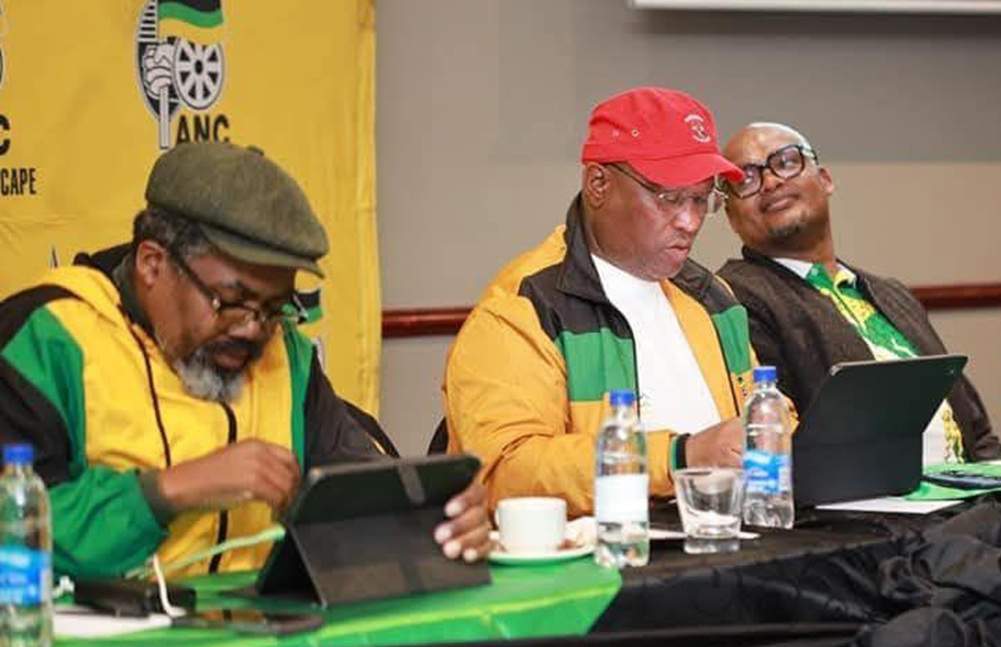
The African National Congress (ANC) in the Eastern Cape has been plunged into turmoil after its much-anticipated provincial elective conference in East London collapsed before it could even get off the ground.
What was meant to be a decisive gathering to elect new leadership instead exposed deep divisions, unresolved disputes, and a growing culture of settling internal battles through the courts? At the centre of the crisis is a bitter factional contest between incumbent provincial chairperson Oscar Mabuyane and his challenger Lulama Ngcukayitobi. The rivalry between the two camps has intensified in recent weeks, with both sides accusing each other of manipulating branch processes ahead of the conference.
The situation reached a boiling point when disgruntled party members approached the courts, arguing that the conference would not be legitimate due to widespread irregularities in branch general meetings (BGMs). Among the concerns raised were claims that several disputes reportedly numbering close to a hundred had not been properly resolved. The court ultimately ruled in favour of halting the conference, dealing a significant blow to the ANC’s provincial leadership and raising serious questions about the integrity of its internal processes.
The collapse of the conference has left the party in a state of uncertainty, with no clear timeline for when it will be reconvened. It also places the legitimacy of current provincial structures under scrutiny, as factions continue to clash over control of one of the ANC’s most important regions. Critics within the party argue that the crisis reflects a broader failure of leadership, accusing both provincial and national structures of ignoring warning signs and pushing ahead with a flawed process. The growing trend of members turning to the courts, they say, highlights a weakening of internal dispute resolution mechanisms within the organisation.
Political analysts warn that the fallout could have far-reaching implications. The Eastern Cape has long been regarded as a stronghold of the ANC, and instability in the province risks weakening the party’s electoral machinery ahead of future polls. For now, the ANC in the Eastern Cape finds itself at a crossroads caught between legal battles, deepening factionalism, and the urgent need to restore credibility among its members and supporters.
Unless decisive steps are taken to resolve internal disputes and rebuild unity, the party risks further fragmentation in a province that has historically been central to its political dominance.